menu
close

A fascinating deviation that winds through the rolling hills of Tuscany, opening up unexpected glimpses of thousand-year-old parish churches, river landscapes and ancient hot springs where nature still takes center stage. An ideal route for those wishing to take the road less traveled and be delighted by fascinating places.

play_circle_filled
Begins:
Colle Val d'Elsa

directions
Total length:
11,8
get_app.kml
Highlights
roadbook
Between millennial Abbeys and Etruscan springs

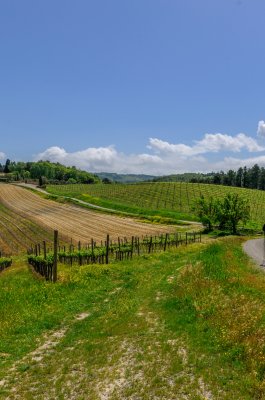
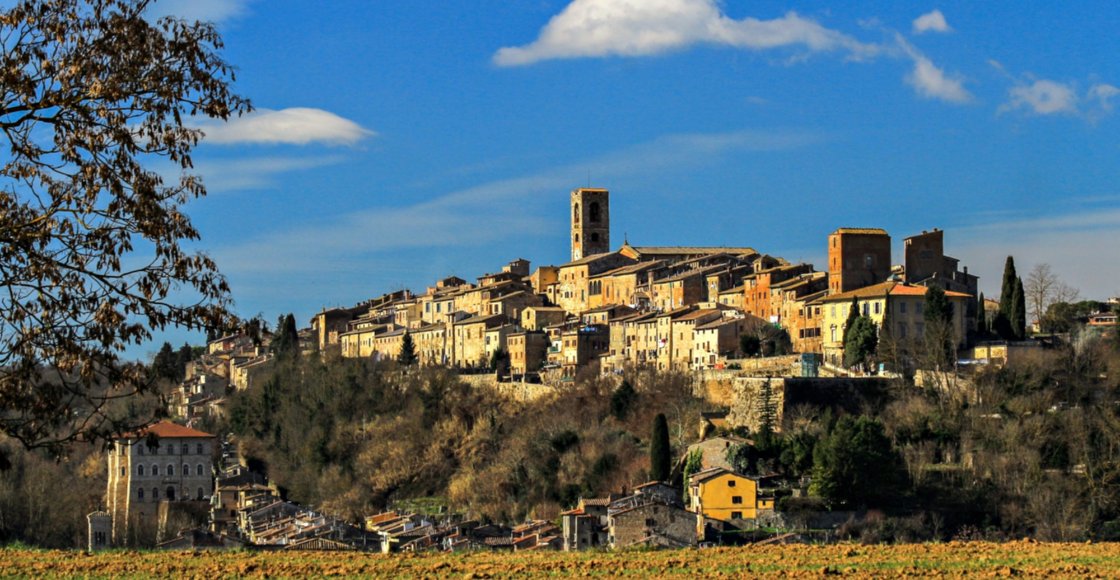
After leaving San Gimignano behind, an alternative route to the main Via Francigena breaks off near Molino d’Aiano and passes through such fascinating places as the Badia a Coneo, before intercepting Gracciano and Quartaia. This secondary route, immersed in nature and history, intercepts the Elsa River and leads to Le Caldane, the renowned hot springs already known in Etruscan-Roman times, where this deviation reconnects with the official route. A quiet and charming variant, ideal for exploring the surroundings of Colle Val d’Elsa.

spirituality
Abbey of Santa Maria Assunta in Coneo, a Romanesque jewel
Badia a Coneo
Photo ©intoscana.it
Abbey of Santa Maria Assunta in Coneo, a Romanesque jewel

The Abbey of Santa Maria Assunta in Coneo, founded around the year 1000, stands in a strategic position between the Via Francigena and the Via Volterrana, nestled in the countryside of Colle Val d’Elsa. Initially Benedictine, it passed to the Vallombrosan Order between 1073 and 1076, taking on the austere architectural style typical of the Order. Consecrated in 1124, the church has a Latin cross plan with a single nave, transept and three apses. On the outside, the portal decorated with zoomorphic motifs and the octagonal dome of the tiburium stand out. The interior preserves capitals carved with motifs of plants and monastic figures, in keeping with Vallombrosian tradition. The once-thriving monastery went into decline in the late Middle Ages and was transformed into a parish in the 16ᵗʰ century. Restored in the 20ᵗʰ century to reinstate its Romanesque appearance, today it is rarely accessible but remains a fascinating stop along the ancient pilgrimage routes.

nature
Where nature meets ancient hot springs: the Sentierelsa and the Caldane of Colle Val d’Elsa

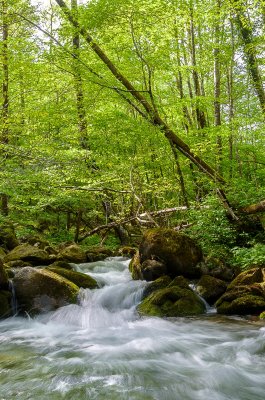
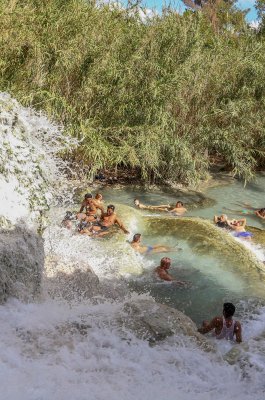
In the urban stretch of Colle Val d’Elsa, the Elsa stream springs to life and gives shape to Sentierelsa, a nature trail stretching around 2.5 miles (4 kilometers) long that connects Gracciano to the Spugna Bridge. Equipped with boardwalks and rest areas, the trail passes through lush river environments where fish, amphibians and birds can be observed. In addition to its environmental value, the path holds historical remnants such as the Gore Medicee (small runoffs that fed the fertile lands of the Medici family), testifying to the importance of the river in the development of the city. Along the way, encounter fascinating places such as Le Caldane, ancient thermal baths already exploited in Etruscan times, and Diborrato, a small lake carved out by the river and fed by a striking waterfall whose waters cascade some 50 feet (15 meters). A stretch that combines nature, history and tradition along a single, rejuvenating path.

What to do In this area
VISITTUSCANY.COM
Keep on traveling on visittuscany.com, Tuscany's official tourism website.
work
Time-based tours
menu_book
Recipes
content_cut
Crafts